Showing posts with label book reviews. Show all posts

Tuesday, September 24, 2013

Stolen


Three out of five stars

A sixteen year old girl is kidnapped by a man who has been stalking her since she was ten. He doesn't lay a finger on her during her entire incarceration and not once threatens her. His past is tragic at best and in the end, he is lonely. Do we sympathize with him?


This book has left me very conflicted. Gemma is the girl in question who was kidnapped and while I am very appreciative that she does not fall in love with her captor and forgive him for all that he does (the girl tries to escape, she tries to harm him) I still am left feeling very uncomfortable with the turn of this novel. Does she grow to have feelings for him? Is it Stockholm syndrome? Is the author writing a novel to add to the long list of fucked up teen books that romanticize abusive relationships? Okay, okay. Lets get that one out of the way first.


No. I don't think that Lucy Christopher is romanticizing this kind of abuse. She makes it very clear that what this person did was wrong and towards the end of then novel, she even calls into question some of the thing that the kidnapper was telling Gemma to maybe cause Gemma to question her home life and if it was truly better than what he was giving her. For this reason, I do appreciate this author. She does however add the confusing element of the kidnapper, Ty, being a character that one can sympathize with. It's a weird feeling to have. When it came to Ty, I was much more brutal in my opinion of him because while he did have a horrid childhood, and while he never tried to hurt Gemma, he still drugged and kidnapped her from the airport. I don't consider the man a monster like the public does in this book, but I don't consider him a character to lend my sympathy to. I can see how a reader could go there though and that's what makes the book terribly uncomfortable for me and terribly confusing.


On a side note, can we just take note for a minute how annoyingly bland the public reaction can be in books like this? Why is it that there is always some female archetype stroking the young girls hair and waxing poetics about what a monster said bad person is and how said victim is too confused to understand what really just happened. Said victim was there. Annoying hair stroker was not.

While I do not romanticize this story, I think many will.  The deeper picture of this story is that there is always more to what we see.  When the book is boiled down to its bare bones, that is what it is about.  However, in this society, teenage girls are falling into these horrible patterns of falling for the emo "misunderstood" boys out there that treat them like shit.  They are going to gloss over the fact that the situation Gemma was in could have been much worst; that in fact, what happened to her was psychologically traumatizing and that while she did somewhat begin to fall for this guy, there is a much more confusing and deeper layer that we must understand in which Gemma's feelings probably stemmed from the fact that he was all she had.  There is so much meat to this story and so many different angles that we can dive into, but unfortunately, most people do not.  Most teens sigh in love and whimsy and dream of their captors coming to sweep them off their feet and take them to Australian.

Alright, so maybe teens aren't that bad but that seems to be the type of teens that I hear from when researching books like this.


Lucy Christopher is a decent writer. I wasn't a huge fan of the first person narrative or the lack of chapters, but she does get her point across with little to no nonsense and focuses on a character development that is very believable. For the novel also only focusing on two characters, it doesn't get dry or boring. If anything, this is an exploration into the mind set of two very different and very broken people. Watching Gemma's sanity slip like it does is what makes this novel worth the read. It is done subtly and I was surprised to find how much the character had truly changed by the end of the novel. For that, I have mass respect for this author.


While it wasn't exactly the kind of book I would normally read, I did enjoy it. I would recommend it to people that are looking for something a little dark and a little different. It's an easy read through and one that does stick with you as well.
Enhanced by Zemanta

Saturday, July 13, 2013

Redwall and a Tangent

Cover of "Redwall (Redwall, Book 1)"
Cover of Redwall (Redwall, Book 1)
Die hard Redwall fans.... don't hate me.
3/5 stars 
***

Before I start this review, I would like to go over something that I think plagues stories in the worst possible way. The exclamation point.

This elusive little creature denotes excitement or a tone of voice that differs from the usual pitch. It is meant to let people know that 'hey, this thing that's happening right now is being delivered to you with lots of feels and urgency'. This little guy is the 'strong emotion' symbol in the punctuation family and if left to its own devices, it will murder its siblings.

Less is more. Strong, declarative sentences from a character shouldn't have to have an exclamation point at the end of the sentence in order to indicate to the reader that someone is upset or excited. That should come from word choice or from the narration surrounding the sentence. Furthermore, exclamation points shouldn't be in the narration. The narrator is often times a third party that is omniscient. They don't need to become excited like the characters. It's weird. Don't do it. Exclamation points have their time and their place. They should not be used because the writer can't seem to convey in any other way, the characters feelings at any given moment.

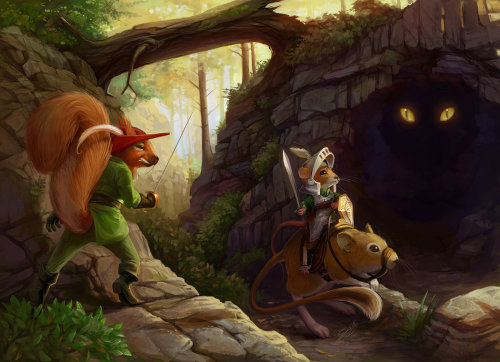
Redwall suffers from the plague of exclamation. Every character seems to be yelling at each other in impassioned tones. Maybe that was a choice on the authors part. Maybe the idea of a small little mouse talking, deserved exclamation points because they had to talk louder when speaking to badgers or foxes. I don't know but I desperately am hoping that Brian Jacques didn't just throw a handful of exclamation confetti at his story because he thought it was a great way to make his dialogue more exciting or intense. Although, the idea of small creatures yelling at each other in constant excitement or anger is funny. Though, when I imagine a world where everyone always talked to each other in exclamation point sentences, it is not pretty. I think it would probably look something like this... except for the scary center part.


That is not to say the exclamation point didn't work in moments. One thing that I learned about Redwall is that it is over the top. Very over the top. So, when the main bad guy Cluny had to repeatedly announce his title to people as “I am Cluny the Scourge!”, I felt like the exclamation point was deserved. Cluny was kind of one of those bad guys that thought he was a lot more awesome than he actually was. The frequent reminders of his title to everyone he met, even people that are in his presence constantly, is a pretty good indication that the guys a dick who probably thinks he's a hit with the ladies and is what all little rats want to grow up to be. When the reality is, all the other rats are talking behind his back and making fun of him. No, this wasn't actually in the story but its the story I've decided to make up about him. Because really, I felt like most scenes with Cluny went like this:

Cluny: “I'm Cluny the Scourge!”
Any other character in the book: “What would you like for breakfast, Cluny?”
Cluny: “Cluny the Scourge does not order breakfast! People bring Cluny the Scourge breakfast without asking! I am Cluny the Scourge! You should know what I want! Cluny the Scourge does not ask! He simply receives!”
Other Character: “So cheese is fine, then?”
Cluny stabs other character: “That will teach you to ask questions of Cluny the Scourge! All others must see and fear me and my actions! Know that I will kill you because I enjoy it! Cluny the Scourge takes no prisoners!”

That's how I felt most of the story with the bad guy went. No motive other than he was a dick that obviously didn't get enough love from his mother as a baby rat. And yes, he often did seem to be a toddler throwing a tantrum.


Now, I want to make it clear, I didn't dislike this book. I just had some major issues with it. Yes, I'm aware its a children/young adult novel and there are a lot of people who are going to bring that to light as a counter argument. But you know what my counter argument to them is? Harry Potter is also a children's/young adult novel. So is the Hobbit, any of the Everworld series, The Outsiders and The Giver. You don't have to dumb down your book for children. They are much smarter than we want to give them credit for.

Now for the good things. I love the fact that there are no humans in this. I adore that the cast of characters are small little mice and squirrels and badgers, running around, trying to save what they love. Redwall has all the makings of a classic fantasy novel where the young and naïve main character has to rise to greatness in order to save the people and the land that he loves. It is a great introduction into a fantasy series (story wise) for people first starting to read. It holds unbelievable imagination and charm with its cast of talking little rodents and is very reminiscent of Wind in the Willows in that respect. There were parts that made me giggle simply because I got to imagine a tiny little field mice making declarative statements and holding a sword high in the air. It was fantastic. Plus, there was Silent Sam the squirrel who is quite possibly the most adorable thing in all of fiction.

I didn't particularly enjoy the story that was told but that was more to do with the fact that it is a very typical ABC story. In my mid twenties, I want something more out of my literature and the writing wasn't done well enough for me to enjoy reading a story that I've read a thousand times before. Redwall unfortunately suffers from having a storyline that is repeated throughout cinema and literature. But, I would again like to point out that this is a great introduction novel into the fantasy world in the respect that the story was good if you've not had much experience with this type of fantasy novel. The writing definitely left a lot to be desired, but if a child is struggling to get into reading, the story is probably more important than a good writing style. I don't feel like this tale holds up once you become an experienced reader, however, or if you are a beginning reader who enjoys a bit more than the surface value retelling of the hero's tale.


I'm afraid in the case of Redwall, nostalgia is what keeps it lasting. I wasn't a Redwall kid so much but I did read a few of them. I do plan on continuing on, at least through Mossflower because I do remember that when I read Redwall the first time around, I was pretty luke warm towards the story and characters.Mossflower was the one that gutted me.


Overall, I think Redwall is great for inexperience readers who are looking for an interesting fantasy to indulge in. For experienced readers, however (young children included), this might be a bit of a let down. Also, if you are an adult that loved this series as a kid, continue to love it. Don't go back and read it because like most things we re read when we're older, cringing may ensue.


To see what else I'm reading this month go to: http://papertales4u.blogspot.com/2013/07/july-book-reads.html

Like me on Facebook, follow me on Pinterest or Twitter, or send me a comment or message to let me know what you think!!!! (see what I did there?)
Enhanced by Zemanta

Friday, July 12, 2013

Screwtape Letters by C.S Lewis


3 out of 5 stars
***

C.S Lewis's Screwtape Letters is a series of responses written by Screwtape (a demon who seems to work in an office in hell) to Wormwood (a demon field agent out to corrupt the souls of the innocent). That alone was what intrigued me. Not only have I not heard a concept like that before, but using the mundane vehicle of an office letter seemed almost ingenious. It left out the dramatics that we usually find in stories about demons and instead told a more subdued tale. The demons truly did feel that they were right. The “Enemy” of the book was God and the angels who were tried to save souls and take them to heaven. Although, now that I think about it, the book seemed to go more with the concept of man is inherently good and is only corrupted due to a demons interference. The interference of angels was either severely downplayed, or they simply did not interfere. That being said, there was so much in this story, in the characterizations, in the concept, that could have been played with further. The lines between heaven and hell could have been blurred and the opportunity to show how morality is a big mass of blurry gray matter could have been highlighted beautifully with this story. Instead, I found Screwtape Letters to be very black and white.

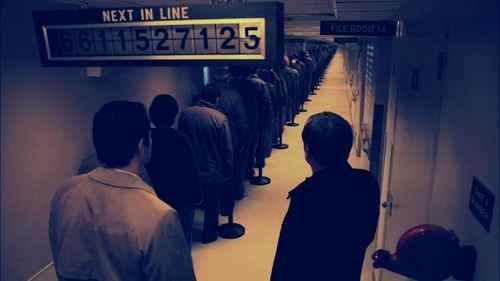
Hell is waiting in line at the DMV
Sin is called into question in this novel easily. The demons of course are trying to encourage certain sins in order to corrupt the human soul. In this war between heaven and hell, the battle comes off as more of an office tiff while the humans are tossed back and forth between good and bad like some sort of tennis ball.  There doesn't really seem to be an in between area or an area where both the demons and angels are right at the same time. It is one way or the other which unfortunately, made the novel very bland. It is in my opinion, that there could have been a lot more to this book. And while I am very pleased that the letters didn't come off as preachy like I was afraid they would, the doctrine being taught here seems to be a very strict and rigid version of Christianity that leaves little to no room for any of the nuances or contradictions in the religion itself. I was very pleased to see the demon calling out the double standards that do exist, and honestly, that was my favorite part, but there was not enough of that.

Furthermore, it is not a book that can stand the test of time. It was well shaped to what Christianity meant during the time of publication, but in a world where the doctrine itself is starting to take new shape, and Christianity is acknowledging these moral gray area's in life, it does not hold up.

Now this is not to say that the book didn't do exactly what it was set out to do. Lewis was a known Christian author, writing in a time where religion was beginning to die and church attendance was declining. He lived on the precipice of change and challenge and I think that he wrote this book in response to that. So, the black and white nature and the demons immorality coming off as “sin” and the human triumphing over this corruption, was all very well tailored to this agenda. I'm not saying there was anything wrong with that and maybe if I was someone that was more of a theology person as opposed to a story oriented reader, I would have enjoyed this more. However, I found the words to be bland, the sentence structure to be a bit disjointed, and the sarcastic moments that were truly the gem of the story, to get lost in the rest of the droning monologues that were taking place. I wanted to see Lewis stretch his storytelling capabilities. I wanted him to make me understand why this demon thought the way he did. I didn't want the explanation of this is what “Our Father” wants and therefore we will follow through. I wanted more depth and shape out of these characters. There were moments that I felt Lewis almost went there, too. In one memorable letter, Screwtape discusses the emotion of love and calls into question whether or not God can love. His written conclusion comes off as panicked and portrays someone who is questioning his very beliefs system. In the letter following this one, we find Screwtape has been punished for his thoughts on the matter, hinting at the fact that this demon might have been an independent thinker going through a very typical human moment, where his faith was challenged. I wanted more of those moments. Diving into that kind of psyche would have packed a much more powerful punch and, at least for me, spoke more about morality than what was written. But, again, those moments that I saw Lewis start to play with were few and far between and they were over much to quickly.

Simply put, this was just not the book for me. I couldn't help wanting a different novel than the one I was reading.  Plus, this portrayal of a demon may have ruined me forever.


Screwtape Letter's is an interesting read and if theology interests you, I would recommend it. But, if you are more of a story oriented person, I would give this one a pass. It was interesting to read Lewis write an epistolary novel, though, compared to Narnia.

If you want to see what else I've been reading, here is my June bookreads (I know, I finished this a bit late): http://papertales4u.blogspot.com/2013/06/june-book-reads.html


Anyone else read this book or heard anything about it? It wasn't known to me until quite recently but apparently it is a popular piece of literature that has been adapted into several plays and a radio drama.
Enhanced by Zemanta

Saturday, June 22, 2013

Book Review - A Map of Time


 This was just not the book for me.

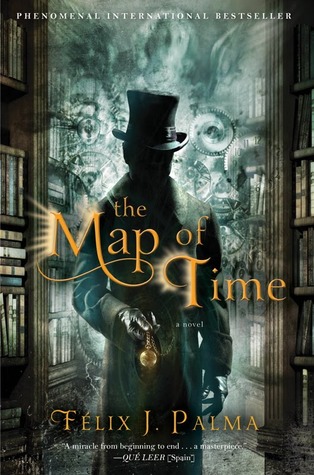
With reviews and snippets such as “A big, genre-bending delight...” and “A master of ingenious plotting”, I thought that it would be worth a read. Granted, this was an impulse buy because I had seen it advertised enough on my Goodreads sidebar so the fact that my interest in it wasn't stellar shouldn't be too surprising since its a novel I wouldn't normally pick up. Though, it went a long way to prove to me that sidebar advertising does work (I did buy it after all) and that the snippets and reviews on book jackets really are complete and utter bullshit. Oh the joys of taking classes where we find out that most of these little blurbs are endorsements simply meant to get you to buy the book itself. My little bubble that had me naively assuming otherwise has burst.

Anyway, Map of Time truly did start off well. It was jarring at first with the breakdown of the fourth wall and I found myself excited and intrigued at the idea that the narrator in this book had a type of knowledge that was all encompassing. This trick soon got old as we moved through the novel. With a constant switch between characters that we never stuck with long enough to care about or get to know, the narrator jumps from time period to person to story that may or may have not happened, jolting the reader out of a moment that was just about to gain momentum and placing them at another standstill. I'm assuming this was to create tension and interest as opposed to the typical ABC's of a linear novel but it did not. Its a tactic that I think would have worked beautifully if it had been used more sparingly but instead, Felix J. Palma took this single idea and decided to put it on a roller coaster that stopped being fun about twelve corkscrews ago.

That being said, when Palma does write well, he writes well.

This time he was sure he had made the right decision, because he had decided not to decide. There would be no more mistakes in the future because there would be no more future. He was going to destroy it completely by putting one of those guns to his temple.... obliterating the future was the only way for him to eradicate the past.”

I wanted more of that. This rawness. This dry humor and sarcasm that you believe is probably being delivered to you with a smirk. Maybe there were more passages like this but I found my eyes probably would have blurred over them since for most of the book I felt like I was falling into a sleepy haze despite the coffee in my hand.

That leads to my next point; Maybe this novel was simply not for me. I can recognize that it had beautiful prose and maybe this jumping tactic used will work for someone else. But for me, it was overdone. On top of that, there wasn't enough dialogue and I am a dialogue whore. So, in a novel with twenty plus pages of block text, I can understand why I was zoning out at times or trying to skip forward to the action. So, if you are a reader that likes inner monologue (think Portrait of an Artist but maybe less depressing?) and stream of consciousness, then I would actually highly recommend this book. If you a person who like character development and a meaty story, I would say to stay away. As a non linear novel, I had high hopes for it (I love non linear, the beginning is the middle and the end is the beginning type stories) but I felt like it didn't deliver and instead was a valiant attempt at an out of the box story but fell shy of it.

Also, H.G Wells was a time traveling maniac who helped create a time machine that inevitably was kind of dysfunctional since it could only travel to one period in time.

Anyone else read this? Anyone even know anyone else who has read this?

To see what else I'm reading this month and some other reviews, go here: http://papertales4u.blogspot.com/2013/06/june-book-reads.html


Like me on Facebook and Twitter to keep up to date of when I blog (and probably hear more about my writing woes) and comment or send me a message on what you would like to see me blog next.   
Enhanced by Zemanta

Saturday, June 8, 2013

Wonderland - Six Impossible Things Before Breakfast


To say this review is mocking me is an understatement. I feel like these words that have jumped out at me from this little fairy tale is a bully on a playground back at my old Elementary school. Alice and her menagerie of characters are taunting me with words that I'm not sure I understand and smiling at me in such a way that makes me think that they might very well hold the secret to happiness.

Upon finishing my copy of Alice's adventures, I was left kind of befuddled. I've never even used the word befuddled before but somehow it seems like the only appropriate expression to describe my feelings. Vowing to sleep on it for a night, I put it aside and the next morning I began reading what I could about the lore surrounding this beloved tale.

I really wish I hadn't.

My initial reaction to Alice's Adventures in Wonderland and Through the Looking Glass was this.


I had never read it before and my only experience with the fairy tale itself is a vague memory of the Disney movie, a made for TV movie that I don't remember liking very much, and Jefferson Airplane creating a beautifully haunting song about this tale that most likely supports the drug idea.
                                    Sidebar: If you have no idea what I'm talking about then here.   http://www.youtube.com/watch?v=R_raXzIRgsA
                                 Also, learn your hippy culture. It's kind of disgraceful at this point if you don't know this song.

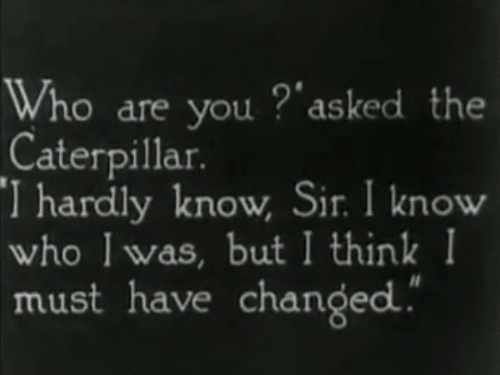
I knew going in that most claim this is a tale about drugs and with only a few chapters behind me, I felt like looking at these people and asking them if they thought it was about drugs because they were on drugs themselves? I'm not judging or anything. Just curious because these so called “obvious” drug references weren't making themselves known to me. What's that you say? There was a Caterpillar smoking hooka? Right. My apologies. That obviously denotes a full on acid trip the author was having about a little girl. Oh, but wait. The girl was eating and drinking things that ended up altering her perception of herself? My morning cup of coffee does the same thing. I know, I know. Why didn't I see it before? In fact, these little nuances of the story explains so much about my own writing. Thank you, you drug reference seekers. Please review Peter Pan next and tell me about the pixie dust. (sarcasm mostly done. Promise.)


From what I could gather, Alice is a little girl wandering through the creative mind that she has managed to mold around her. Whether she is walking through a dream or she is playing pretend in her living room, is up for debate. As she makes her way through Wonderland, she meets a cast of characters who all offer tales and wisdom which are described in such ways that the young and the yet to be educated seem to have a knack for. If you don't know what I'm talking about, go listen to a child ramble about their day for a bit. The way they understand the world and the words we use in them is vastly different than our our. Carroll loves to play with this, taking words that we automatically see one way and twisting them into something entirely different. Alice's journey is a mish mash of word play, imagination and nonsensical moments that we all have while dreaming, and some of us even have while pondering life during the quite moments of our day. (And while on drugs. See guys? I'm not forgetting about you!)

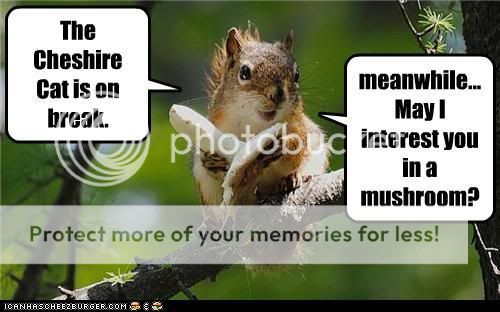
When looking further into this tale, I ran across a lot of different things that always make me a bit sad to be a literature major. People have of course dived into this story, picking it apart until there is nothing left and then treating it as an atom and dividing it some more. Suddenly Alice is a metaphor for the struggles of puberty (she doesn't like this being little and big scenario all that much and comments about how terribly confusing it all is). The caterpillar is seen as a sexual predator, obviously after the small girl. The Garden Alice is so desperately trying to get into is of course the Garden of Eden (because all gardens in literature are for some reason) and the tale itself is about a child trying to come terms with the fact that death is very real. We can also take a more mathematical approach to it and view the mushroom as Alice's way of understanding the properties she needs to manipulate in order to regain her proper size. There are theories and there are passionate essays out there that go in to much more detail that I will here and if you are a person who wishes to read more of those, I highly suggest this site (http://www.alice-in-wonderland.net/ ). It has everything Alice related you could want to know. Here's the thing about all those theories though and it is a problem we face in school and in what is meant to be scholarly critics of a work of a literature. Sometimes, authors just write in order to create a story. That's it. That's the big secret. They don't always sit down and try to figure out what Alice is going to mean to the rest of the world. They don't always take into consideration that people out there are going to be analyzing their characters every action and looking for the deeper meaning in this piece of text simply because they can't find the deeper meaning in life. Sometimes, authors write what they think is good and funny and enjoyable and then they sit down at night and move on. Motifs and symbolism often times go too far in literature and I think Alice is a victim of that more than anything else.


"I'm very much afraid I didn't mean anything but nonsense. Still, you know, words mean more than we mean to express when we use them; so a whole book ought to mean a great deal more than the writer means. So, whatever good meanings are in the book, I'm glad to accept as the meaning of the book."(source: Collingwood, "The Life and Letters of Lewis Carroll")

In the authors words, it was never intended as anything more than a fairy tale. Of course, we shouldn't discredit how people view literature because often times it tells us more about the people reading the tale, than the tale itself. But, in the case of Alice, I think its also important to remember that nonsense is fun and the wild imaginings that have been produced from this tale are timeless and obviously hold a sense of power over us.


Now that I'm done with that rant, I would like to ask one thing. Did Alice annoy anyone else? Seriously, kid. Shut up. Stop interrupting the tale of the Jabberwocky and just sit and listen for a minute.

If you are looking for other Wonderland-esque stories, I suggest Neil Gaiman's Neverwhere. Before even reading Wonderland, I thought that Gaiman made some beautiful references to the text.


Also, if you are interested in seeing what else I will be reading this month, view my previous post, June Reads, here: http://papertales4u.blogspot.com/2013/06/june-book-reads.html

Disagree with me about Alice? Please let me know. Comment below or mail me through my authors profile on the side. Also, go like my facebook page in the sidebar in order to keep up to date on when I post.


And, as always...


Torchwood - Top Secret

Not a fan of Torchwood? Why the hell not?


Alright, alright. So it's not a show for everyone. To my fellow nerds out there, however, here is a very different spin off of Doctor Who. If you haven't watched it, go Netflix it now. Granted, it's a bit overdone at times, but is still one of the only Sci-fi shows I have seen that makes me cringe over what humanity might do if aliens invaded.


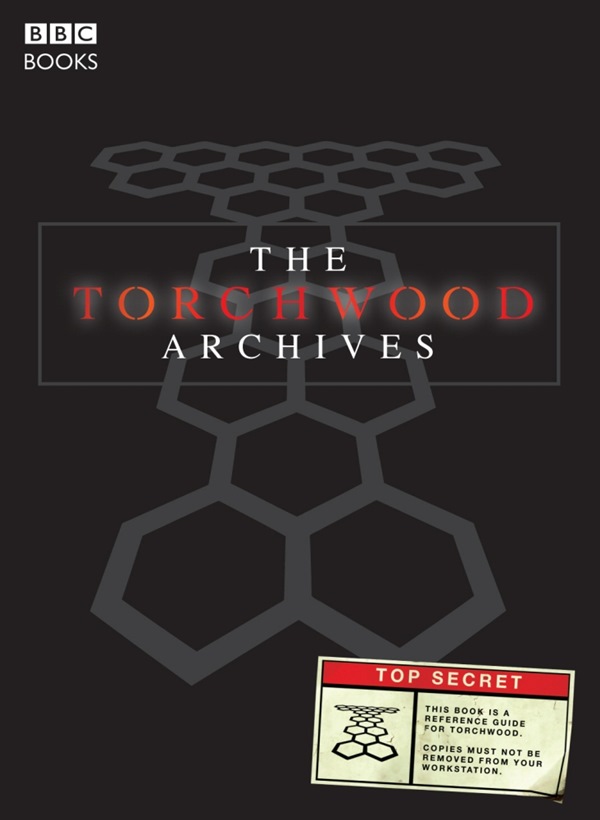
The Torchwood Archives isn't exactly anything special. It is more of a companion piece to the first two seasons. Presented to us as someone who has managed to follow the Torchwood team around and collect notes and pictures of them without them knowing, the book compiles all of the authors research into a volume that Ianto tells us is never supposed to leave the Hub. There are logs from Captain Jack and little post it notes from the other team members. If you are a fan of the show, you will like it. Little one liners give more depth to what was happening between the episodes and some of the innuendo is definitely worth a giggle or two. It was nice to see how these characters related to each other and see this universe expand a bit more.


Pick it up if you want a fun read.  And if you are looking for what else I'm reading this month, go to my June reads post found here http://papertales4u.blogspot.com/2013/06/june-book-reads.html

And, just because I can.... Here


Sunday, June 2, 2013

June Book Reads

It's sickening sometimes to realize just how much I read and then I am disheartened other nights when I realize that I don't read nearly enough. This is the crux of my brain half the time. Apply the “I do too much” vs the “I don't do enough” syndrome to any subject and you have my opinion on my life down pretty pat (Is pretty pat even a saying...? Now it is.).

I do honestly try to read as much as I can and I do enjoy mixing up my books a bit to include classics and works of fiction that indulge in my sometimes overactive fantasy geared brain. I like the idea of reaching goals and I love the feeling that I get when I finish a novel. I also hate the feeling I get when I finished a really good novel and can't move on after that.

(Credited to: http://www.epicreads.com/blog/15-undeniable-truths-about-book-nerds/)

Seriously. This is a problem.

So far, for June, I have a few little books picked out to try and swim through with the hopes of discovering something noteworthy. So far, these are the ones that I know I will read just because once I finish them, it'll give me an excuse to buy more.

Alice's Adventures in Wonderland and Through the Looking Glass
By Lewis Carroll (as if you needed clarification)


I don't know how I haven't read this yet. I love my fairy tales. I love them to unhealthy extents. But, somehow Alice has eluded me. I never really watched the Disney movie growing up and I have yet to see the Tim Burton adaptation (is it any good? People are having some strange opinions on it I'm noticing). I didn't even know there were two versions of this book. Thankfully, I own a copy that has both. It also came to my attention the other night that there is an Alice debate out there where some people believe that there is a pure form of this classic and adaptations should stick to it and others are holding up a silent middle finger to said purists. I don't land on either side, but I'm curious to see what all that is about. Either way, I'm about fifty pages in to this tale and am enjoying it. Though, I mock all you people that say this was drug induced... More on that when I finish.

Review Now Uphttp://papertales4u.blogspot.com/2013/06/wonderland-six-impossible-things-before.html

The Map of Time
By Felix J. Palma


I picked this book up at Powell's on a whim. I knew next to nothing about it other than the fact that it's been popping up on my goodreads account (http://www.goodreads.com/user/show/7341304-dana) like crazy. Being someone who does not read summaries (I tend to skim) I have to say that I was thrown off guard when I started reading it. As of right now, the narrator breaks the fourth wall relentlessly, jumps through time lines like a little jumping bean (I probably could find a better analogy but that one makes me laugh) and the characters have decided to go to H.G Well's in hopes that he can send them back in time to stop Jack the Ripper.

Let that sink in.

I'll let you know how I feel about the book when I'm finished but so far it has left me standing on uncertain ground.

Review Now Uphttp://papertales4u.blogspot.com/2013/06/book-review-map-of-time.html

The Annotated Peter Pan
By J.M Barrie


I'm giving you a fair warning now. I love Peter Pan to a sometimes terrifying extent. I won't go too much into that now because I know there will eventually be a blog about my adoration for this twisted little tale but know that you will see references to Pan and the Lost Boy's numerous times.

The Annotated Peter Pan is another one of my buys at Powell's. Not only does it have the story but has the history of the play itself and a biography on the author. It goes in depth on the behind the scenes of this beloved book and attempts to explain the phenomenon surrounding it. If you like biographies, I would suggest it. Again, I'm not done with it, but so far, so good.

Imaginary Companions and the Children Who Create Them
By Marjorie Taylor

Imaginary friends is a topic that I am fascinated with. The idea that all these children all around the world can create something so similar is mind blowing. These little creations are a sign of creativity and a sign of learning. Up until recently, however, we considered the idea of a child having one, to be some what worrisome.

Marjorie Taylor is a professor who specializes in children and their imaginary friends. She conducted studies on whether or not it was dangerous for a child to create such a thing and dives into the reasons as to why some children have these invisible friends, and some do not. I'm keen on reading what she has to say not just because this is a topic that I have a particular interest in but because I was blessed to be one of her students at The University of Oregon when I was freshman and really enjoyed her class.
The Torchwood Archives
By Gary Russell

Don't even start with me. I'm a nerd and need to work through some Torchwood grief.

Review now uphttp://papertales4u.blogspot.com/2013/06/torchwood-top-secret.html

The Screwtape Letters
By C.S Lewis

Um... didn't Lewis write magical children's tales about going through a wardrobe? Here I was naively thinking that that was it but apparently, he also wrote about demons. The Screwtape Letters is a series of letters passed back and forth between a demon and his nephew. I know nothing else about the book but this and somehow, that is enough to go out and buy it immediately.

Review Now Up: http://papertales4u.blogspot.com/2013/07/screwtape-letters-by-cs-lewis.html

I'm sure that the June reading list will grow as I either finish books too quickly, or have the urge to “browse” the local bookstore. As always, I'm looking for new books and would love to hear your suggestions.