Showing posts with label wonderwall. Show all posts

Thursday, July 18, 2013

Goodbye My Dear Character


This morning I woke with the intention that I have every morning. To write. But, as I poured myself some coffee and tried to wake up a bit, I noticed myself easily getting distracted by things that really weren't that interesting. “Oh, the person outside is sneezing too loud. I should go look out my window and watch them for a bit.” or “Last nights dishes in my sink look rather disgusting. I should definitely clean them” or my favorite “Look at the pink nose on my cat! I'm gonna poke it”. Things like that took precedent over writing all morning long until about eleven o'clock rolled around and I realized that this was ridiculous.

I then proceeded to agonize over whether I should just write the next scene in my book or if maybe I should go back to the start and reread what I've already written to get my head around the story. I've started and stopped this novel so many times (which is unusual for me) that I am worried I'm being a bit schizophrenic in my writing. So, the logical way to fix that is to go back and read the 100 + pages that I have written and see if what I have there is acceptable. I even proceeded to start to do that before the lure of a shower called out to me instead.

Finally, after my shower, and realizing it was close to one in the afternoon now, I told myself that I was being pathetic. This is only day two of my goal to write two to three pages of my story every day and I was already about to give up. I had just wasted a good four hours of my morning, on my day off, doing god only knows what because sitting and writing just didn't seem like a task I was up to.

I forced myself, I am proud to say, to sit and write my two pages today. Actually, I only wrote about a page and a half but I still feel accomplished with it. I also now know why my mind was rebelling over not wanting to write.

It was trying to protect me.

The scene I had planned next was a death scene. I had decided a few days ago that this character was going to die. It needed to be done to show the readers that safety is becoming scarce in this story and the main characters need to act or else its going to be too late for them. I knew when I woke up this morning that this was the scene I would have to write. What I didn't know was that I would have such a visceral reaction over it.

One day, when this is published, I will share this blog post again and tell you what character it is that I am talking about, but for now, the character will remain nameless.

I wasn't even two sentences into the scene when all of the sudden, I was clutching my stomach and crying hard enough to shake. I didn't even see it coming. There was no warning for these tears. My body just reacted. I wrote the scene in question with watery eyes and a strong urge to delete everything I was typing out. I want it on record, I as the writer, was not okay with this death. But, I also understand that it is what was needed for the story. In battle, people don't come out completely unscathed. Tough decisions also are not made if the situation around you isn't dire.

The Moors I imagine I'm looking over 
I barely made it through writing what I did and when I was finished, I sat and sobbed. We're not talking silent and pretty tears. Maybe one day I will make up a tale of my hair blowing in the wind as I looked over the moors of an English countryside, grieving for this lost character, but today I will be truthful. We're talking full out, hold yourself tightly because you're afraid you are going to fly apart, kind of sobbing. It hurt.


Afterward, while still weeping, I fixed myself a cup of coffee and sat there for a minute, forcing myself to ask the question of whether or not this scene is necessary. Did it truly need to happen? Yes.

Why did it need to happen?

I can't really answer that. It's just one of those things that I know is right for the story and while the larger part of me wants to take that scene, tear it apart, and fix the situation, hell, even kill off a character that doesn't mean as much, I can't. It's an interesting line to walk, really. The writer and the reader in me is rebelling violently against this but my characters aren't allowing this to change.


So what does everyone think? Are there deaths in stories or TV shows that you have rebelled against so much that you feel like you are grieving them? Leave your comment below or on my facebook page and let me know what you think.
Enhanced by Zemanta

Wednesday, July 17, 2013

Creative Writing Is Like a Scribble


Some day, I hope to read this post while sitting on the back porch of my house that sits along the Oregon Coast. Or in Ireland. I'm really not picky.

I'm in the midst of one of those writer woes where I question every word I write and bang my head several times against a keyboard. Then, during the moments that I genuinely enjoy what I've written, I proceed to question if this is really what I should be spending my time dong because it doesn't seem like it is a viable option for my future. After all, at twenty four, real jobs and real lives need to assert themselves as opposed to the fantasy of writing a novel about children who are being forced to grow up.

I have jokingly been told that if I was the first child born in my family, there probably would have been no more. That is how I feel about book three. If this was the first book I've tried to write, I wouldn't have written any more of it. It's not that what I'm writing isn't good and its not as if I'm struggling to come up with idea's. It's that this is the book that needs to wrap everything up. The pay off that I've been asking readers to wait for is finally here and I don't want to disappoint. Add that on top of what I know about the publishing world and suddenly I become frustrated. Not only do I need to make a compelling story, but I need to do one in a certain amount of words because the publishing companies know that the general populace has the shortest attention span in decades and can only handle so many pages thrown at them. My word count, almost triples the amount of words usually allotted to a new author.  And that is only the first book. Of course there are exceptions to the rule, especially in the fantasy genera, but I don’t think my ego is big enough to assume that I will fall into that small little category of authors who managed to get around that. So, as I'm writing, I find myself wanting to edit and cut as I go, which then just hinders the creative process, which then makes me decide that I should probably cut out certain storylines, which then makes me upset because I'm the writer, of course I think its important to the story and so on and so on and so on. It's been a frustrating loop of ick that I'm sure plenty of writers have gone through before.  In the words of the great Chukc Shurley "writing is hard".

But that's not all. No. Because that? That I could probably handle. I then start thinking about the fact that it doesn't matter if I somehow drink a magic potion and become the greatest writer to ever live. It doesn't mean a damn thing if you are not in the right place and the right time and even then, that might mean nothing if you don't know how to market yourself.

Head. Meet Wall. Become great friends because you two will collide for the next x amount of years.

The publishing world is a mish mash of frustration and tears and proverbial blood that makes me want to run
screaming through the night while tearing out my hair and crying big sobbing tears that I only like to cry when a favorite character on a television show dies. It also leaves me rambling in run on sentences and for that I am sorry.

Add this overwhelming panic to everyday life like college, work, trying to maintain a social life, a blog, and a genuine desire to consume arts and other literature to keep up with the writing world so I can stay on top of the business, and you have just created a very frazzled me. My usually tidy house is in a disarray that I can't even muster up the energy to clean and every day that I don't manage to get out and do some amount of exercise in order to hopefully counteract the shotty immune system that I was blessed with, I feel guilty. Furthermore, there are about a dozen and a half things that I've committed to over the next six months and I have a dwindling bank account because of situations popping up like sick cats, personal emergencies, or you know, food. I somehow managed to grocery shop today which was a feat all on its own.

Last night, this all came to a head. The storm has been brewing for a while and last night it hit in that jittery too much caffeine and not enough hours in the day kind of way. So, I made myself a deal.

There's not much I can do about all this. Work and college and social lives are always going to happen because they have to and most of the time that I'm doing all these things, I'll be thinking about my story. And its because I'll be thinking about my story, that I'm not going to give up on writing because obviously its important enough for me to spend hours every day obsessing over. But there are things I can do to become more proactive.

  1. Write three pages everyday because eventually, those three pages will turn into a book.
  2. Work on my blog or Whimsy Travels (because yes, while I'm freaking out about all this, I of course started a new project to add to my time spent on the computer) at least an hour a day.
  3. Do your damn schoolwork! Thank God I'm good in class.
  4. See the sunshine because they tell me its good for you.
  5. Do not worry if your house is in a disarray or if you have to turn off your phone and neglect your life for a bit. It's not always going to be this way.

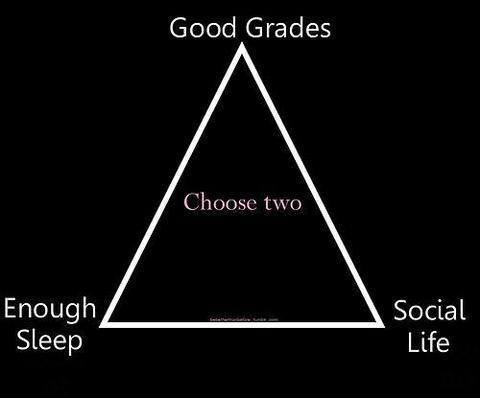
The time has come that I have resolve face. My characters don't deserve to be wandering around the dusty mazes of my mind. They deserve to be out there and heard and read about. In order to do that, I have to go a bit crazy and I have to accept that that's okay. I also have to write blogs like this to vent my frustrations and move on from the fact that I'm falling into a stereotypical emo writing mode that I so very loathe. To anyone that knows me, I have my 'shit needs to get done' face on. Which means I'm probably going to become a hermit. At times like this I'm always reminded of that triangle thing they tell you about when you enter college. At each corner of a triangle is a different aspect of your life; sleep, social life, school. The sides of the triangle only make up two of these aspects or some weird thing like that but basically, what it comes down to, is you sacrifice something. You can't have all three. The PTB dictates that you only can have two. Well, writer me doesn't really have a triangle (so I'm not sure why I'm rambling on about this analogy) but I do have a scribble and somewhere in that scribble, something in my life is gong to get lost or drawn over or violently negated.

I'm not sure where I was going with any of that.

In other news, in order to calm the chaos of my brain a bit, I've decided to re-read Harry Potter. I sometimes forget why I love writing and stories and then I remember nights spent reading by flashlight or days spent eating pumpkin seeds while reading these stories on my bed. It's time to remember why I love creating and who better a reminder that J.K Rowling and the completely memorizing world she created.

Like I said. Hopefully, one day, I will be sitting on a beautiful back porch, cup of perfect coffee in my hands, reading this old entry of mine and laughing at the inner turmoils that were completely unnecessary.


Or I will be in a straight jacket, in a comfortable mental institution, being fed pudding.


Enhanced by Zemanta

Friday, June 28, 2013

Book Review - Imaginary Companions and the Children Who Create Them

One thing that I really enjoyed about this book is the way Marjorie Taylor focused on dispelling some of the more negative aspects of imaginary friends. Just because a child creates an imaginary friend, does not mean they are lonely or there is something wrong in their developmental cycle. This was the mainstream belief until quite recently. Then, societies perception changed and suddenly, imaginary companions were viewed with prestige. Studies have shown however that having an imaginary friend does not mean that a child is special or is showing great signs of genius. These children aren't even particularly more creative when they are older when compared to other children. You know what a child having an imaginary friend does show? It shows that a child is a child. End. Of. Story.

Children create because they can. The ones who do not create an imaginary friend don't have an disadvantage or advantage over the ones that do. Their interest just lie elsewhere. Furthermore, it has been suggested that due to parental disapproval, most children don't even let on that they do have an imaginary companion.

Yes yes. Of course there are always the exceptions to the rules and there are always children who are going to create imaginary friends to fulfill some sort of need they are not getting or to play out a desire or even to manifest a problem into a form they can understand. But those are the stories we hear about. They are not necessarily the norms.

In my daydreams I was training myself to be a fool; in mapping and chronicling Animal-Land I was training myself to be a novelist.”
                               ~C.S Lewis on his imaginary world he used to play in as a child.

This book originally interested me due to its topic. In my own story (Dear God let it be published and finally done with one day) I write about imaginary friends and what happens to them when children stop believing they exist. My premises falls into one of the harsher views of the imagination where one little girl couldn't distinguish reality and fantasy quick enough and so her parents decided to put a stop to it. While reading Imaginary Companions and the Children Who Create Them, I must admit that I was a little horror stricken to find out that this scenario, doctors, priests and all, isn't a far stretch. I would like to note, however, that I do make the distinction in the story that this is one case and not an all encompassing view. Her friend, in fact, navigated this world and the imaginary one quite easily.
But where does that imaginary friend go when the child stops seeing them? Often times, kids let go of these companions without much thought and the companion itself is then deduced to a memory that may be recalled every once in a while. This, is one of the many subject that I try to touch on in my novel. So of course I needed to pick up this book because lets face it, Google search can only give you so much. Plus, most sights about imaginary friends out there were starting to make me sick seeing as it was mostly message boards about concerned parents not knowing what to do with the idea that their child was talking to something they couldn't see.

That's another good point this book makes. Children often times know that what they are doing is make believe. They can distinguish between reality and fantasy. They just continue to play in the fantasy world long past the point of comfort for some parents. It's natural. It's fun. And they are entertaining themselves in a way that doesn't include the acid trips that pass as children's television these days.


Seriously. What the hell is that?

Upon reading this book, I didn't necessarily gain new information but it was nice to hear about the studies done in order to gain some sort of basis for this phenomenon that we often see within children. The chapters that most interested me were the ones on older children or adults having imaginary friends. There was even a small section about writers and how by the definition of an imaginary companion, most writers fall under the category of having one. As someone who writes, I constantly feel like my characters are doing or saying things that I don't necessarily plan for them. Yes, a majority of my story is a flimsy little idea in my head but I never solidify anything because I have learned over the years that you have to leave room for your characters to tell their story. So, when my characters go off and say or do things that I am adamantly against, or surprise me in ways that I didn't know possible, I am technically participating in an imaginary friend type relationship. The irony of this does not escape me seeing as the main character of this story is based on my imaginary companion as a child.

There are so many good things about this book that I don't even know what to cover and what not to cover. I would love to just swoon over all the points that the author makes and relate to you everything Taylor covers or share the passages that I underlined (or in the cases where parents think their child was talking to Satan, got genuinely mad at) but then there would be no point in you reading the book itself.


If you are interested in psychology, read this book. If you are interested in imaginary friends, read this book. If you are a parent, please please please read this book. It is informative and endlessly fascinating and the little antidotes that the children relay to the interviewer are often times priceless.


Did anyone else have an imaginary friend as a kid? Comment down here or share your post on my Facebook page. I'm always looking for new stories in order to further enhance the Imaginaries in my own novel.

To see what else I'm reading this month and for more reviews, go here; http://papertales4u.blogspot.com/2013/06/june-book-reads.html
Enhanced by Zemanta

Wednesday, June 12, 2013

Yes, I'm Crazy - Yes, I Write


There's a little bit of insanity that goes hand in hand when you are trying to write. Or, at least there is for me. Bachelor degree's, real world jobs, social lives, blogging and constantly searching for someone who will take my crazy and adore it, leaves little to no time to focus on a novel. Let alone a novel that for some reason I felt needed to be complicated in such ways that I wish I could go back in time and tell my fourth grade self, “Don't aspire to be a writer. It'll bring you nothing but headaches and an early onset of arthritis”. That, however, would create a paradox and if there is one thing I will take away from fictional characters experiences, it's that paradoxes never end well.

So, since I can't go back and change the mind of my little self, I'm forced to live this life. And when I say forced I do mean choose but you know, force just sounded like a more solid word choice.

One of the first things people seem to learn about me is that I'm writing a series. Oddly enough, I am never the one that shares this tidbit of information but I have a handful of friends and family members that point this out to almost every new person I meet as if this is a series that has some sort of discernible weight in the literary world. These same friends and family members are now going to point out that I just pointed all of this out to you in a blog post. And around and around we go.

Anyway... Eventually, these new people find out that what I am writing is more than just a dabble. The conversation usually goes something like this.

Strange New Person: “Oh, so what do you write?”
Me: “Umm... I'm just working on a small novel.”
Well Meaning Friend or Family Member: “Oh my Gosh! She is in the middle of writing her third book in a trilogy all about imagination and what it means for little kids and how we as adults react to it all and its really really good and I've already read it and it just blows my mind and she's being too modest. Have I mentioned its the third book?”
Strange New Person: “Wait... really? You've written three books?”
Me: “Well.... yeah...”

If you think I'm joking or exaggerating, I can give you the name of a dear friend who I am pretty much quoting verbatim right now. She'll have no problems probably saying this exact same spiel to you.

Now, after this is out of the way, people somehow coax out of me that this is a story that I've kind of been focusing on for, oh, about fifteen years give or take. Of course, I haven't been writing it this entire time. The idea started as something small when I was a child and then when I was older, it was one that I picked up again to write. It has grown beyond what I ever thought it would and now requires little self written note cards in order to keep straight the mythology I have created in this world. When, Strange New Person, finds this out, one inevitable question always arises.

“Do you feel like a crazy person?”

The answer?

Yes.

Yes. Yes and YES.

I would add a few expletives to that but family members are reading this and they still sometimes pictures me as a little girl. I do not want to change this perception too much seeing as it still works in my favor during the Christmas season.

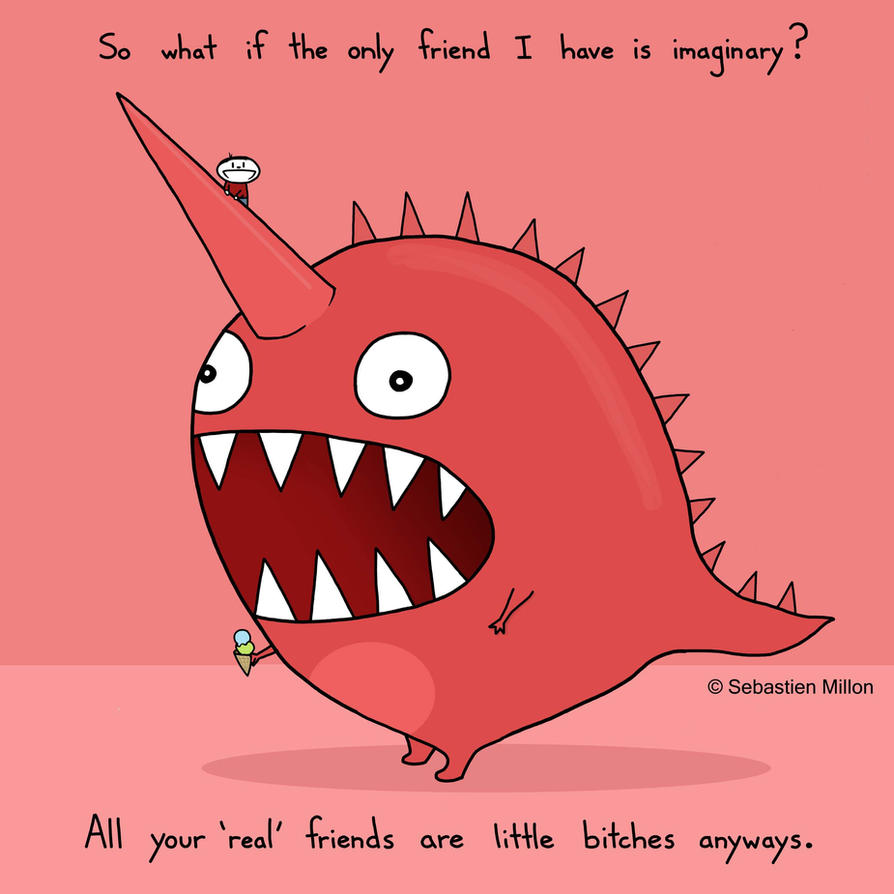
But, I am, in fact, a cross between Topher (below) and that owl. 

In short, writing makes you crazy. I didn't always feel like this. There was a time when I could write and I'd step away from my computer and switch to whatever else it was that I needed to do. Now, it's a very different story. When I'm not writing, I'm thinking about that world I've created. I'm thinking about those characters. When something new pops up in my life, I wonder how they would react to it. When a song comes on the radio, my ears tend to hear words that relate to scenes and moments that I have either written or have yet to write. Upon knowing book three is going to be the final book, I create blogs in order to distract myself from actually writing it because I know when I finish, these characters are done. When you live with a small set of characters for close to fifteen years, they become something beyond what you originally created. When you have to say goodbye to them.... well, I don't want to think about that quite yet.

Thus, the crazy person feeling.

I catch myself, sometimes. There are times when I've been sitting and talking about my story with friends and realize that I am talking about my characters as if they are real people. It's as if I should be able to call them up on the phone and invite them out for a drink. I know them well. Too well. I know what they eat, I know their biggest fears, I know who they love and who they think they love. I know how they react to death and sorrow and how they laugh and what their smile looks like. One character, in fact, is what I measure all potential guys to in my life. Which is probably why I'm single. The point is that I know these characters as well as I would my best friend. I don’t always agree with them (which makes for some interesting writing nights) and there are plenty of moments where I have to walk away from the computer because I am too angry or too upset to continue to write what they have to do or what they have to respond to.
Thankfully, I have understanding friends who when I start speaking as if these characters are real, they know I am simply slipping into writer me. If they were less understanding, they'd have me committed.

Writing is a process that drives me absolutely insane. I love it and I crave it and sometimes, when the night is late and my living room is lit only with the pale glow of my computer screen and a few small candles, I put my head down and have to breathe deeply as I mourn, laugh, and love along with these character. Sometimes, I think they are so entwined with my life that I forget where they end.

Would I change this? Well... yes. I already admitted in the beginning of the post that I would tell little me not to become older me. But, here's the thing about little me. She was a stubborn little thing. I doubt she'd listen.


Like me on facebook to keep up to date of when I blog (and probably hear more about my writing woes) and comment or send me a message on what you would like to see me blog next.   
Enhanced by Zemanta

Tuesday, June 4, 2013

To Read or Not To Read With an Accent

Do you read with accents?

A friend of mine woke me up this morning (why do you text me at nine in the morning on my day off?) with this question. She wanted to know if when reading a book where the character obviously has an accent, do I read the character with said accent. It caught me off guard. I read a lot of British literature, I just finished a book about two women living in the Caribbean, and I've made my way through stories like Huckleberry Finn where the dialogue is broken and should have a Southern drawl to it. Yet, I'm pretty sure that when I'm reading them, they all are American. It's the default setting to my brain. I read and unless a word or a phrase comes up that the author has intentionally used in order to denote ethnicity or culture, I don't even second guess it. Which, I kind of find horrible since this is not what the author intended. It reminds me too much of that idea of unless an author denotes skin color in a book, we tend to think of the character as white. Granted, accents aren't as harmful as the default setting of race but it is still interesting to take note of.

To prove my point to myself, I went and opened one of my Harry Potter books. We know these kids are British. We never thought otherwise. But, when reading the book itself, I had to concentrate to hear the accent. Is this just me? Do other people have this problem as well?


Now, this question was asked of me early this morning (early by my standards) and I've been thinking about it all day. I started to examine my own book and my own characters to see if they had different voices. It comes down to this.

Yes, they have a different voice when I think about it but it is not one that is discernible by accent. Their words have a different cadence to them. One of the boys speaks in short clipped tones while the other one tends to go into longer explanations. One of the girls has a tendency to rush her words while the other thinks about what she wants to say. One character has a teasing quality to her words while the other is taken seriously. So yes, while I can differentiate between their voices, it comes down to the fact that word choice and subtext is what defines them. Accent does not play into this. I live in Oregon. We have a Pacific Northwest voice. When I was in Europe, an Australian girl was able to pinpoint exactly where I lived by my accent. When I read, I'm sure all the characters I am enjoying have the same accent as I do and I just differentiate them through the tone of their words or by the authors indication of what they are feeling when they speak. But, now that I think about it, I have books that have been translated from a different language. Most of my literature is about people living in London, Chicago, New York, Italy... I highly doubt any of them have Pacific Northwest accents.

So, is this a good thing? Bad thing? Does it matter? Are we missing a point that the author is trying to make? We write in order to enhance and share cultures. Are we ignoring a vital part of this enhancement by not hearing these accents? Furthermore, is it right, like in cases such as Harry Potter, for two different versions to be released; one with British slang and nuances, and one without? Would this beloved tale really not have done as well with a British tongue that is not widely known in the States?

It's something to think about and I would love to hear opinions on the matter.